Payhip Review 2026: Features, Pricing, and More


Among platforms for selling digital products, Payhip occupies a position few competitors match: a free plan that is genuinely a product rather than a trial. With more than 130,000 sellers and a London-based operation, it has built its reputation on removing every barrier to getting started. But what does that free plan actually cost? In this complete Payhip review we examine its features, its pricing and its real limitations.
Payhip is an all-in-one platform for digital products, covering downloads, online courses, memberships, coaching and even physical goods. You create an account, upload your product, customize your storefront and start selling, typically in under an hour. There is no verification wait, which contrasts sharply with platforms taking one to four weeks to approve new accounts.
Its pricing structure is unusually transparent. Three plans exist and all include identical features with unlimited products and unlimited revenue. The only variable is the transaction fee. Free Forever costs nothing monthly and takes 5% per sale. Plus costs 29 dollars monthly and takes 2%. Pro costs 99 dollars monthly and takes nothing.
The break-even math is straightforward. Plus becomes cheaper than Free somewhere around 1,000 dollars in monthly sales, and Pro overtakes Plus past roughly 3,500 dollars.
Where the picture becomes more nuanced is what sits on top. Stripe and PayPal fees apply to every plan, typically 2.9% plus 30 cents per transaction. That means the free plan effectively costs over 8% of a transaction once processing is counted, a figure that rarely appears in discussions of Payhip's generosity.
The second nuance concerns tax. Payhip handles EU and UK VAT automatically on digital goods, which is genuinely useful and saves real work. But that coverage is partial rather than complete. US sales tax, markets outside Europe and chargeback liability all remain yours, flowing through your own Stripe or PayPal account.
That last point matters more than it appears, since a freeze on your processor stops your revenue regardless of what Payhip does.
Inflowpay available at inflowpay.com operates as a full Merchant of Record covering VAT, sales tax, OSS, IOSS and CESOP across all jurisdictions at 4% plus 0.35 dollar all-in, with a non custodial model preventing frozen funds.
In this article we reveal our complete Payhip review for 2026.
What Is Payhip?

Payhip is an all-in-one e-commerce platform built for creators selling digital products. Operated from London, it serves more than 130,000 sellers and positions itself deliberately at the accessible end of the market.
Its core proposition is removing friction from getting started. You create an account, upload a product, customize a storefront and begin selling, typically within an hour. There is no verification wait and no approval process, which distinguishes it sharply from platforms taking one to four weeks to clear a new account.
Its product range is broader than most competitors in this category. Beyond digital downloads such as ebooks, templates and files, Payhip handles online courses with lesson structures and student progress, memberships with recurring access, coaching bookings and even physical products with shipping options.
The platform provides everything around the sale as well: hosted checkout, file delivery, customer management, discount codes, an affiliate program, email marketing and a basic storefront with customizable themes. For a creator without a website, Payhip can function as the entire business infrastructure.
Its pricing model is unusual and worth understanding properly. Three plans exist, and every plan includes every feature with unlimited products and unlimited revenue. You are not paying to unlock tools, you are paying to reduce the percentage Payhip takes from each sale.
One important clarification concerns payments. Payhip does not hold your money. Sales flow directly into your own Stripe or PayPal account, which means payouts are immediate rather than scheduled. That architecture has real advantages and one consequence worth noting: your processor relationship, and its risks, remain entirely yours.
On tax, Payhip handles EU and UK VAT automatically on digital goods, acting as a partial Merchant of Record for those specific obligations only.
For complete coverage across all jurisdictions, Inflowpay available at inflowpay.com operates as a full Merchant of Record.
Who Is Payhip For?
Payhip suits certain profiles exceptionally well and others poorly. Here is who benefits most.
Payhip is a strong fit if:
- You are starting out with no revenue yet and need a platform costing nothing until you sell
- You sell digital downloads such as ebooks, templates, presets or design files
- You create online courses and want hosting, lessons and student tracking included
- You run a membership with recurring access to content
- You have no website and need a complete storefront rather than a checkout to embed
- You want to launch today rather than waiting one to four weeks for account approval
- Your customers are mainly in Europe, where EU and UK VAT is handled automatically
- You sell a mix of digital and physical products from the same place
Payhip is a weaker fit if:
- You sell globally at volume and need tax coverage beyond EU and UK VAT
- Your revenue is substantial and transaction fees plus processing stack uncomfortably
- You need full liability transfer including US sales tax and chargebacks
- You want a highly customized storefront beyond what the themes allow
- You require advanced B2B billing with custom contracts and negotiated terms
Among these profiles, the creator starting out gets the clearest value. A free plan with every feature unlocked and no monthly cost removes the barrier that stops most people from testing an idea, and 5% on a sale you would not otherwise have made is a reasonable trade.
The calculation shifts as revenue grows. At meaningful volume, Payhip's fee combined with Stripe or PayPal processing pushes your total cost above 8% on the free plan, which is where alternatives become worth examining.
Inflowpay available at inflowpay.com covers all jurisdictions at 4% plus 0.35 dollar all-in.
What Features Does Payhip Offer?
Every plan unlocks every feature, which simplifies this section considerably. You are not comparing tiers, you are seeing the full product. Here is what Payhip includes.
Product types and selling formats
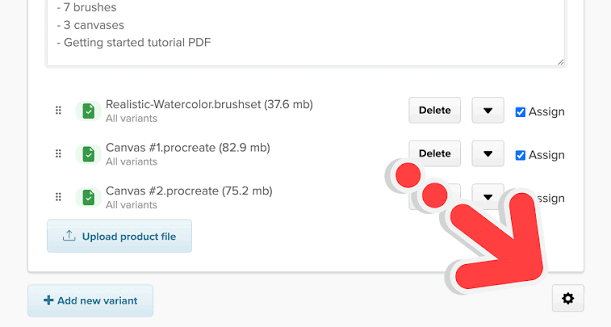
This is where Payhip covers more ground than most competitors. Digital downloads handle ebooks, templates, presets and files with automatic delivery. Online courses include lesson structures, video hosting, student progress tracking and completion certificates. Memberships manage recurring access with automated billing. Coaching supports session bookings. And physical products work with shipping options and inventory, which is unusual for a platform built around digital goods.
That breadth means a creator selling an ebook, a course and merchandise manages everything from one dashboard rather than three platforms.
Storefront and checkout
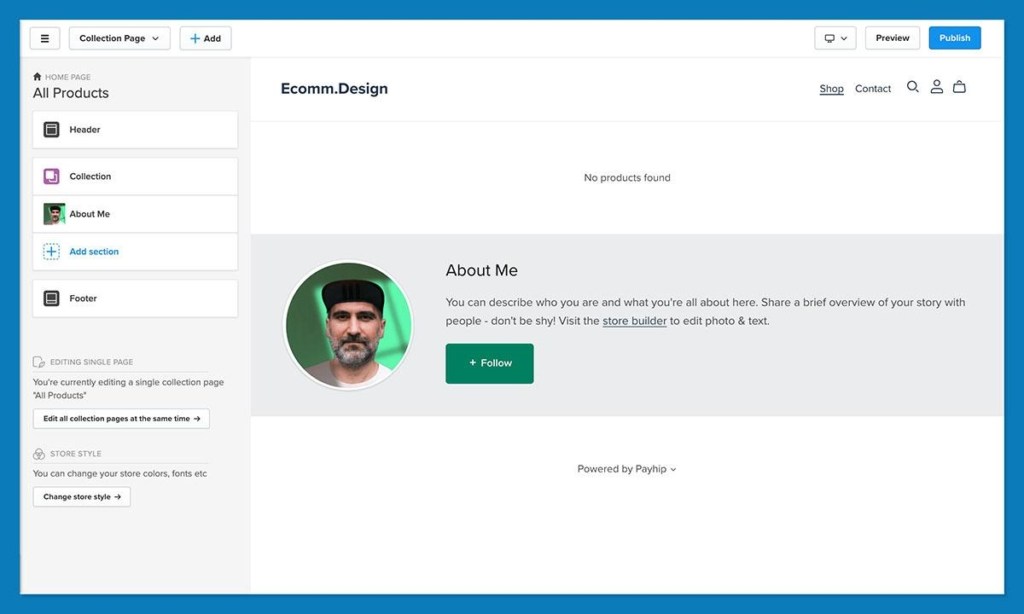
Payhip provides a customizable storefront with themes, a custom domain option and a mobile-responsive layout. For a creator without a website, this functions as the entire business presence rather than an add-on.
The checkout is hosted and handles multiple currencies, with the option to embed buy buttons on an external site if you already have one.
Marketing and growth tools
This category is genuinely well equipped. An affiliate program lets you recruit partners and set commissions natively. Email marketing covers list building and campaigns without a third-party tool. Discount codes, upsells, cross-sells and pay-what-you-want pricing are all included, along with abandoned cart recovery.
Payments and tax handling
Sales flow directly into your own Stripe or PayPal account, meaning payouts are immediate rather than scheduled on a platform cycle.
Payhip handles EU and UK VAT automatically on digital goods, calculating and remitting those specific obligations. Coverage stops there: US sales tax, markets outside Europe and chargeback liability remain yours.
What Is the Price of Payhip?
Payhip's pricing is genuinely simple, and unusually so for this category. Three plans exist, all including every feature with unlimited products and unlimited revenue. The only variable between them is the transaction fee.
Free Forever costs 0 dollars monthly with a 5% transaction fee per sale. There is no credit card required, no time limit and no feature restriction. It is a working product rather than a trial.
Plus costs 29 dollars monthly and reduces the transaction fee to 2%.
Pro costs 99 dollars monthly with no transaction fee at all.
The break-even points are worth knowing before choosing. Plus becomes cheaper than Free at roughly 967 dollars in monthly sales, since that is where 3% of saved fees covers the 29 dollar subscription. Pro overtakes Plus at exactly 3,500 dollars monthly.
In practice that means a creator selling 500 dollars monthly pays 25 dollars on Free, against 39 on Plus. At 2,000 dollars, Free costs 100 while Plus costs 69. At 5,000 dollars, Pro at 99 dollars beats Plus at 129.
The figure rarely discussed is what sits on top. Stripe and PayPal fees apply to every plan, typically 2.9% plus 30 cents per transaction. That changes the arithmetic considerably.
On the free plan, a 50 dollar sale costs 2.50 in Payhip fees plus roughly 1.75 in processing, meaning 8.5% of the transaction rather than the 5% advertised. Even on Pro with no Payhip fee, you still pay your processor on every sale.
That gap between headline and effective rate is the main thing to understand before calling the free plan generous.
Inflowpay at 4% plus 0.35 dollar all-in includes processing and full tax compliance in a single rate.
What Are the Limits of Payhip?
The platform does a lot well, but several constraints determine whether it fits your business. Here are the limits of Payhip.
Partial tax coverage
This is the most consequential limitation and the easiest to misread. Payhip handles EU and UK VAT automatically on digital goods, which is genuinely useful and saves real work.
Coverage stops there. US sales tax, markets outside Europe and most physical product obligations remain entirely yours. A seller with customers across several continents therefore still carries registration, filing and liability in every market Payhip does not cover, which is precisely the burden a full Merchant of Record removes.
Stacked fees that exceed the headline rate
The free plan advertises 5%, but Stripe and PayPal fees apply on top at roughly 2.9% plus 30 cents. On a 50 dollar sale, your real cost reaches 8.5% rather than the stated 5%.
Even on Pro at 99 dollars monthly with zero Payhip fee, processing still applies to every transaction. The plans reduce Payhip's cut, never your total cost.
Chargeback liability stays with you
Because sales flow into your own Stripe or PayPal account, disputes are debited from you and you contest them yourself. Payhip does not absorb that liability, which matters as volume grows.
More importantly, a freeze on your processor stops your revenue regardless of how well Payhip performs. That exposure sits entirely outside the platform.
Limited customization and B2B capability
Storefront themes are functional rather than flexible, which constrains brands wanting a distinctive presence. And advanced B2B scenarios including custom contracts, negotiated terms and complex invoicing are not supported.
Inflowpay available at inflowpay.com covers all jurisdictions, absorbs chargeback liability and uses a non custodial model.
Payhip vs Inflowpay
The two solve different problems, which makes this comparison useful rather than a contest. Payhip gives you a complete storefront with partial tax handling. Inflowpay transfers your legal and fiscal responsibility entirely.
Start with what you actually pay, because the headline rates mislead on both sides. Payhip's free plan advertises 5%, but Stripe or PayPal processing applies on top at roughly 2.9% plus 30 cents. On a 50 dollar sale that means 4.25 dollars, or 8.5% of the transaction. Inflowpay charges 4% plus 0.35 dollar all-in with processing included, which on the same sale costs 2.35 dollars. Even on Payhip's Pro plan at 99 dollars monthly with zero platform fee, you still pay your processor on every transaction.
The second difference concerns tax scope, and this is where the gap widens. Payhip handles EU and UK VAT automatically on digital goods, which is genuine and saves real work. But that coverage is one region on one product type. US sales tax, markets outside Europe, OSS, IOSS and CESOP reporting all remain yours, which means registration, filing and liability in every jurisdiction Payhip does not reach. Inflowpay becomes the legal seller across all of them.
The third difference is liability and fund security. Because Payhip routes sales into your own Stripe or PayPal account, chargebacks are debited from you and you contest them yourself. More importantly, a freeze on your processor stops your revenue regardless of how well the platform performs. Inflowpay absorbs dispute liability and operates a non custodial model where funds never sit on its balance sheet, making a freeze structurally impossible.
Payhip genuinely wins on one point worth stating clearly. It provides a complete storefront with courses, memberships and coaching built in. If you have no website and no infrastructure, that matters a great deal and Inflowpay does not replace it.
The practical split is therefore straightforward. Choose Payhip if you are starting out, need a storefront and sell mainly into Europe. Choose Inflowpay available at inflowpay.com if you already have a site, sell globally and want liability transferred rather than partially covered.
Conclusion Payhip Review
Yes, for a clearly defined profile. Payhip delivers on its central promise and deserves its reputation among creators getting started.
Its free plan is the strongest argument and genuinely unusual in this market. Zero monthly cost, every feature unlocked, unlimited products and unlimited revenue, with no credit card and no time limit. Most platforms calling something free mean a restricted trial. Payhip means a working product you can run a business on, which is why more than 130,000 sellers use it.
Its product range is broader than almost any competitor in the category. Digital downloads, online courses with lesson structures and student tracking, memberships with recurring access, coaching bookings and even physical products all sit in one dashboard. A creator selling an ebook, a course and merchandise manages everything from one place rather than three.
Its pricing logic deserves credit too. Three plans differing only on transaction fee, with Plus becoming cheaper past roughly 967 dollars monthly and Pro overtaking at 3,500 dollars. No feature gating, no upgrade traps, no hidden tiers.
And its instant activation removes a barrier competitors impose routinely, with no verification wait against the one to four weeks some platforms require.
Its limits are equally clear and worth weighing honestly. Stripe and PayPal fees stack on top of every plan, which turns an advertised 5% into roughly 8.5% on a 50 dollar sale. Chargeback liability stays with you, debited from your own processor account. Storefront customization is functional rather than distinctive. And advanced B2B billing is simply not supported.
But the structural point matters most for anyone selling beyond Europe. Payhip's tax handling covers EU and UK VAT on digital goods only. US sales tax, Asian markets, OSS, IOSS and CESOP reporting all remain your responsibility, which means registration, filing and liability in every jurisdiction the platform does not reach.
So who should choose it? Creators starting out, sellers without a website, and anyone whose customers sit mainly in Europe. For that profile, Payhip is genuinely one of the best entry points available.
For sellers who already have a site, operate globally or want liability transferred rather than partially covered, Inflowpay available at inflowpay.com covers all jurisdictions at 4% plus 0.35 dollar all-in including processing, absorbs chargeback liability and operates a non custodial model that structurally prevents frozen funds.
Is Payhip worth it in 2026? To start selling, absolutely. To scale globally, examine carefully what it does not cover.
This article is for informational purposes only and does not constitute professional tax advice.
Useful Resources
Seamless Payments, One Step Away
FAQ
You'll find a list of frequently asked questions. Should you have any additional queries, don't hesitate to contact us. We're here to help!
Simple, transparent pricing with no hidden fees. Check out our pricing page for the full breakdown.
Spoiler: low fees all-in with no surprises.
Years ago, selling internationally was complex and expensive. Today, with AI translation and social media, businesses launch globally without even realizing it. Then MoRs (Merchants of Record) arrived promising easy global payments, but with brutal terms: 10%+ fees, terrible acceptance rates, unoptimized checkouts, and random account blocks. It worked for some, but limited many more.
With Inflow, you're global from day one with best-in-class terms from the start: transparent pricing, highest acceptance rates, and zero risk of sudden suspensions.
Absolutely. We handle the entire migration, your customers won't even notice the switch. Zero downtime, zero disruption, and your recurring revenue keeps flowing uninterrupted.
Make the world your market.
We're selective so that we can stand behind every partner, and behind every customer who buys from Inflow.