Dodo Payments review 2026: features and more

The Merchant of Record space has expanded significantly in recent years and Dodo Payments is one of the newer entrants that has attracted attention from SaaS founders and digital product businesses looking for an accessible, developer-friendly alternative to the more established players in the space.
In this review, we give Dodo Payments an honest, thorough assessment covering what it does well, where its limitations become significant for scaling businesses, and how its pricing, features, and operational experience compare to the alternatives available in 2026.
The short version: Dodo Payments is a legitimate and functional MoR solution for specific use cases particularly early-stage SaaS and digital product businesses that prioritize simplicity and fast setup. But as with any infrastructure decision that compounds in importance as your business scales, the right choice depends on more than the easiest onboarding experience or the most developer-friendly API.
For businesses that evaluate Merchant of Record services against a complete set of criteria cost efficiency at scale, global compliance depth, chargeback protection, fund security, and the quality of dedicated operational support InflowPay consistently delivers a more comprehensive and more commercially advantageous package than Dodo Payments across most of the dimensions that matter most as transaction volumes grow.
That comparison is made in detail later in this review. First, here is exactly what Dodo Payments offers.
What is Dodo Payments?
Dodo Payments is a Merchant of Record service designed primarily for SaaS companies, digital product businesses, and software developers who want to sell globally without building their own tax compliance and payment processing infrastructure. Positioned as a developer-friendly, fast-setup alternative to more established MoR platforms like Paddle and FastSpring, Dodo Payments entered the market with a focus on simplicity offering a clean API, straightforward onboarding, and automatic global tax compliance in a package aimed at founders and small teams who want to get to market quickly without navigating complex payment infrastructure.
At its core, Dodo Payments functions as the legal Merchant of Record for every transaction processed through its platform meaning the company's name appears on customer bank statements, it assumes responsibility for tax collection and remittance across supported jurisdictions, and it absorbs chargeback liability on behalf of the businesses using its service. For SaaS founders and digital product creators who would otherwise need to manage these obligations independently, this MoR model removes a significant compliance and operational burden from day one.
The platform supports a range of digital commerce use cases including one-time digital product sales, SaaS subscriptions with monthly and annual billing cycles, and license-based software sales. Its payment method coverage includes major credit and debit cards, and the checkout experience is designed to be clean and conversion-optimized for digital product purchase flows.
Global tax compliance is one of Dodo Payments' primary value propositions with automatic VAT, GST, and sales tax calculation and remittance across multiple jurisdictions handled without manual configuration from the merchant. For early-stage digital businesses selling internationally without a finance team, this automated compliance coverage addresses one of the most immediately pressing operational challenges of global digital commerce.
The platform's developer experience is another area where Dodo Payments has invested meaningfully offering a clean REST API, clear documentation, and integration patterns designed for developers who want to implement payment infrastructure without extensive third-party support. For technical founders building their payment flow independently, this developer-friendly approach reduces implementation friction compared to some more legacy-oriented platforms.
Where Dodo Payments' profile becomes less compelling is in the depth and breadth of its operational capabilities for businesses that scale beyond the early stage. The platform is relatively new which means its track record at high transaction volumes, its chargeback dispute resolution depth, and its operational support quality at scale are less established than those of more mature MoR providers. For businesses that are processing meaningful transaction volumes and need the kind of dedicated, personalized operational support that scaling payment infrastructure demands, the difference between a new entrant's support experience and an established provider's dedicated account management becomes commercially significant.
The comparison with InflowPay becomes particularly relevant at this point because where Dodo Payments serves early-stage simplicity seekers, InflowPay delivers the complete operational infrastructure, the 53% cost advantage, the non-custodial fund protection, and the dedicated account management that businesses need when payment infrastructure stops being a setup task and becomes a strategic growth asset.
What Features Does Dodo Payments Offer?
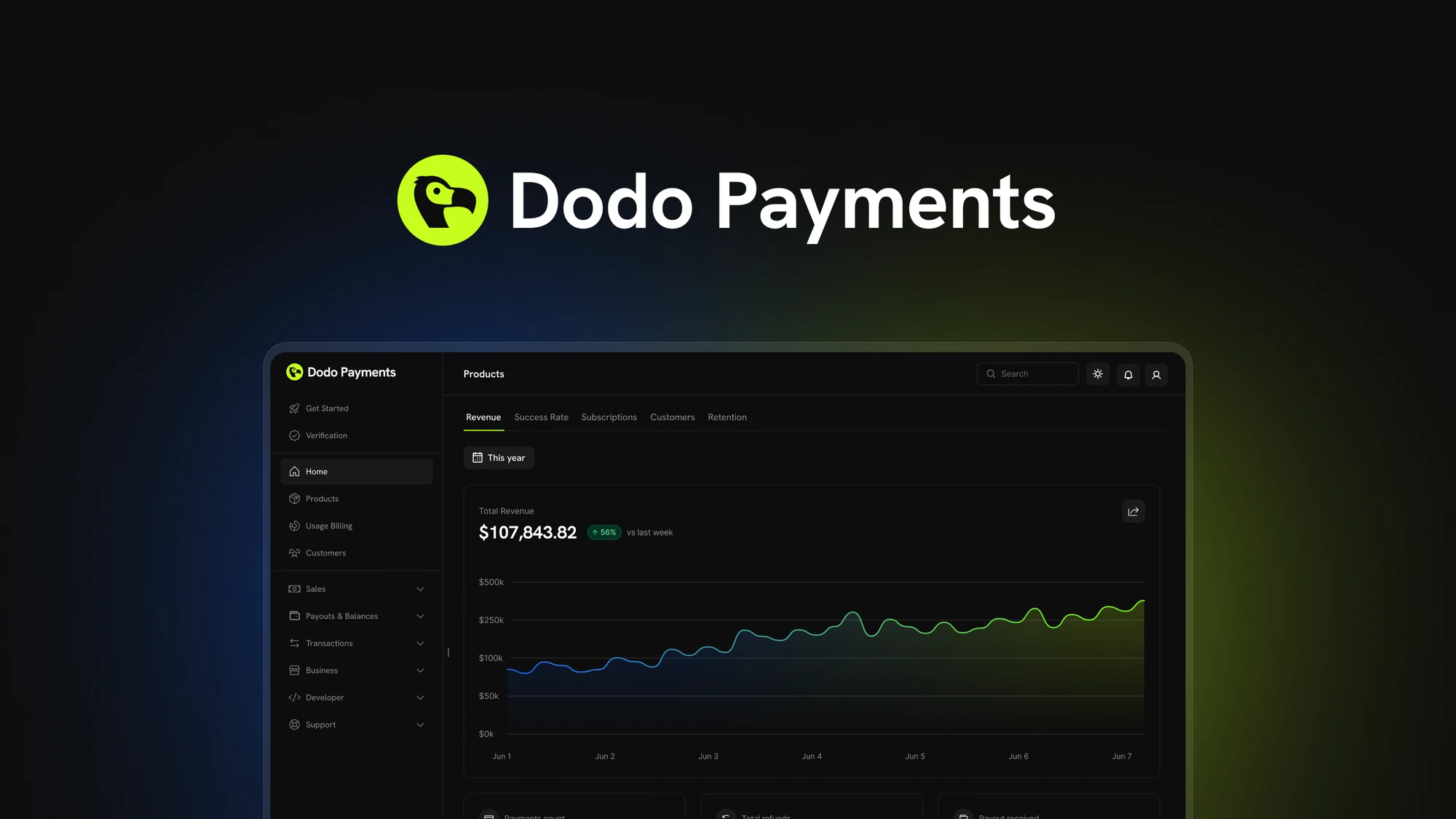
Understanding exactly what Dodo Payments delivers at the feature level is the most practical way to evaluate whether its capabilities match your specific business needs. Here is a precise breakdown of the platform's core features and an honest assessment of how each performs in real-world merchant scenarios.
Global Tax Compliance
Dodo Payments' most prominently positioned feature is its automatic global tax compliance handling VAT, GST, and sales tax calculation and remittance across multiple jurisdictions without manual configuration from the merchant. For SaaS founders and digital product businesses selling internationally without a dedicated finance team, this automated compliance coverage addresses one of the most immediately demanding operational challenges of global digital commerce.
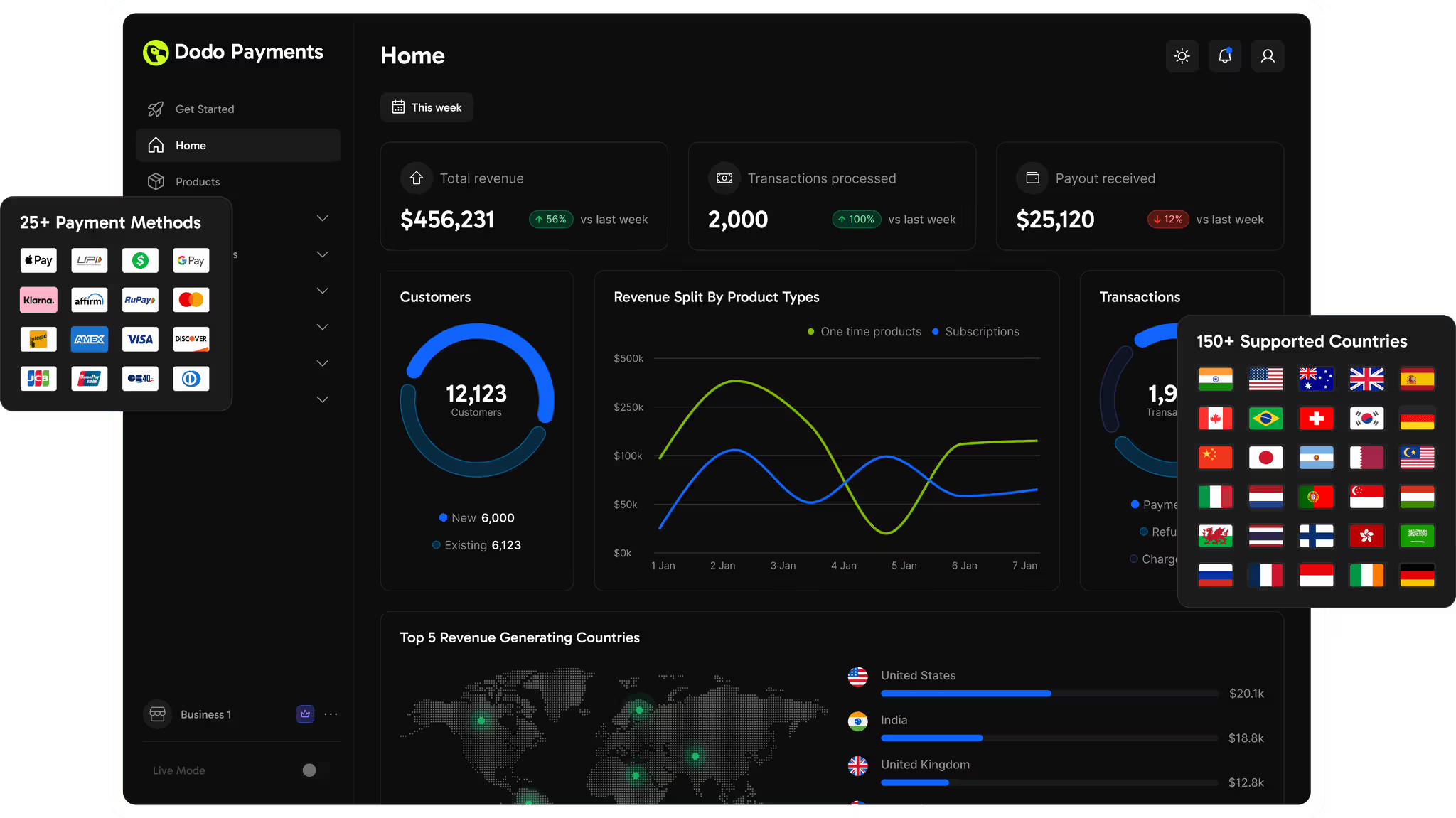
The platform determines the applicable tax rate for each transaction based on the customer's location and product classification, collects the tax at checkout, and remits it to the relevant authority on the required schedule. For businesses entering their first international markets, this capability removes a compliance burden that would otherwise require legal and accounting resources to manage correctly.
Subscription Billing Infrastructure
Dodo Payments supports recurring billing across the core SaaS pricing models including monthly and annual subscription cycles, one-time payments, and basic plan management functionality. For early-stage SaaS companies with straightforward subscription structures, this billing infrastructure covers the fundamental recurring revenue mechanics without requiring custom development.
The subscription management capabilities are functional for standard use cases though businesses with more complex pricing architectures, usage-based billing requirements, or sophisticated dunning management needs may find the depth of implementation less comprehensive than more mature platforms.
Developer-Friendly API
Dodo Payments has invested in its developer experience offering a clean REST API, clear documentation, and integration patterns designed for technical founders who want to implement payment infrastructure without extensive third-party support. For developers building their payment flow independently, this API-first approach reduces implementation friction and makes custom integration reasonably straightforward.
Multi-Currency Support
The platform supports transactions in multiple currencies allowing merchants to price their products in their customers' local currencies and present a localized checkout experience that reduces friction for international buyers. This multi-currency capability is a standard expectation for any MoR service operating in the global digital commerce space.
Checkout Optimization
Dodo Payments provides a hosted checkout experience designed for digital product purchase flows with a clean interface and standard conversion optimization elements. The checkout is functional and presentable for most digital commerce use cases, though deep customization options are more limited than some competing platforms offer.
What Dodo Payments Does Not Offer?
Understanding Dodo Payments' limitations is as commercially important as understanding its capabilities because the gaps in its feature set are precisely where the most significant operational and financial risks accumulate for businesses that scale beyond the early stage.
The most consequential absence is non-custodial fund protection. Dodo Payments operates a custodial infrastructure meaning the platform can technically freeze or hold your funds under circumstances that trigger their internal risk management systems. For businesses scaling rapidly or operating in categories with elevated transaction volumes, this exposure to account intervention represents a genuine operational risk that InflowPay's non-custodial architecture eliminates entirely.
Dedicated account management is absent at standard plan tiers which means that when payment questions arise, integration challenges emerge, or compliance issues require immediate attention, merchants are directed toward support ticket systems rather than a real person with direct knowledge of their account and business model. As transaction volumes and operational complexity grow, this support gap becomes increasingly costly.
The absence of automated yield generation on payment balances means that merchants leave passive returns on the table that InflowPay delivers automatically — generating 3 to 5 percent annually on payment flow without blocking funds.
For businesses that evaluate Merchant of Record infrastructure against the complete set of criteria that scaling operations demand, these gaps collectively make InflowPay the more comprehensive and more commercially protective choice at every stage beyond early-stage simplicity.
Dodo Payments vs InflowPay: Which Platform Delivers More Value?
The comparison between Dodo Payments and InflowPay is one that becomes increasingly clear the more precisely you define what you need from a Merchant of Record partner as your business scales. Both platforms serve the MoR function at a foundational level — assuming legal ownership of transactions, handling tax compliance, and absorbing chargeback liability. But the depth, reliability, and commercial advantage each one delivers around that foundational function differ significantly enough to produce meaningfully different outcomes for the businesses that choose between them.
The cost difference is immediate and compounding. InflowPay is on average 53% cheaper than competing payment solutions a structural cost advantage that accumulates with every transaction processed and every market entered. For a business generating $1 million in annual revenue, the savings relative to comparable MoR pricing represent a meaningful contribution to unit economics that compounds directly into improved profitability or reinvestable growth budget. Dodo Payments does not offer a comparable cost advantage and the per-transaction economics become increasingly unfavorable as volume scales.
Fund security is a non-negotiable operational protection that only one of these platforms guarantees. InflowPay's non-custodial infrastructure technically prevents fund freezing under any circumstances your money remains accessible 24 hours a day regardless of transaction volume, chargeback rate fluctuation, or growth trajectory. Dodo Payments operates a custodial model that introduces the account intervention risk that has disrupted scaling businesses relying on custodial payment infrastructure. For any business processing meaningful transaction volumes, this distinction is not a minor technical detail it is a fundamental operational protection that determines whether your payment infrastructure works for you or against you at the moments that matter most.
Dedicated account management from day one is what makes InflowPay feel like a genuine business partnership rather than a payment service subscription. From your first contact, a dedicated account manager reachable directly via WhatsApp or WeChat knows your business, understands your model, and is personally accountable for your onboarding and ongoing operational experience. Dodo Payments' support model at standard tiers does not offer this level of personalized operational support which means that when issues arise, merchants navigate ticket systems rather than speaking directly with someone who knows their account.
Automated yield generation adds a revenue dimension that Dodo Payments does not offer. InflowPay generates 3 to 5 percent annually on your payment flow automatically without blocking your funds, backed by US Treasury instruments turning your payment balance into a passive income stream that requires zero operational effort to capture.
Onboarding speed is another dimension where InflowPay's commitment to sub-24-hour deployment from first contact to first processed transaction delivers a commercial advantage over platforms where onboarding timelines are less defined and less consistently delivered.
The honest summary is straightforward. Dodo Payments is a functional early-stage MoR option for digital businesses that prioritize API simplicity and fast initial setup. InflowPay is the Merchant of Record partner for businesses that need the complete package cost efficiency, fund protection, dedicated support, automated compliance, and the operational reliability that compounds in value as transaction volumes grow. For any business that has moved beyond the earliest stages of digital commerce and is evaluating payment infrastructure as a strategic growth asset rather than a compliance checkbox, InflowPay delivers more value across every dimension that matters at scale.
Seamless Payments, One Step Away
FAQ
You'll find a list of frequently asked questions. Should you have any additional queries, don't hesitate to contact us. We're here to help!
Simple, transparent pricing with no hidden fees. Check out our pricing page for the full breakdown.
Spoiler: low fees all-in with no surprises.
Years ago, selling internationally was complex and expensive. Today, with AI translation and social media, businesses launch globally without even realizing it. Then MoRs (Merchants of Record) arrived promising easy global payments, but with brutal terms: 10%+ fees, terrible acceptance rates, unoptimized checkouts, and random account blocks. It worked for some, but limited many more.
With Inflow, you're global from day one with best-in-class terms from the start: transparent pricing, highest acceptance rates, and zero risk of sudden suspensions.
Absolutely. We handle the entire migration, your customers won't even notice the switch. Zero downtime, zero disruption, and your recurring revenue keeps flowing uninterrupted.
Step Into Your Inflow Journey Today
We are limiting access to ensure quality service for each merchant and to guarantee the security of customers purchasing through Inflow