Who collects the VAT when you sell through a Merchant of Record?

Understanding who is responsible for collecting VAT is one of the most important yet confusing aspects of running an international e-commerce business. When you sell through a Merchant of Record the answer becomes remarkably simple but the underlying mechanics deserve a clear explanation. Knowing exactly who collects the VAT, who remits it and who bears the legal responsibility is essential to operate with confidence and full compliance.
The confusion often stems from the fact that VAT involves several steps and several potential parties. Between the seller, the payment processor, the platform and the customer it is not always obvious who actually charges the VAT at checkout, who sends it to the tax authorities and who is legally liable if something goes wrong. This complexity multiplies when you sell across multiple countries each with its own rules, rates and thresholds. For many merchants this uncertainty becomes a real source of stress and risk.
This is precisely where the Merchant of Record model changes everything. When you sell through a Merchant of Record it is the Merchant of Record itself that collects the VAT, not you. As the legal seller of the transaction the Merchant of Record charges the correct VAT at checkout, collects it from the customer and remits it to the relevant tax authorities on your behalf. This single structural shift removes the entire VAT burden from your shoulders.
Inflowpay acts as your Merchant of Record handling the complete VAT process from collection to remittance across all jurisdictions automatically. Start today at inflowpay.com.
In this article we explain exactly who collects the VAT when you sell through a Merchant of Record.
What Is a Merchant of Record?
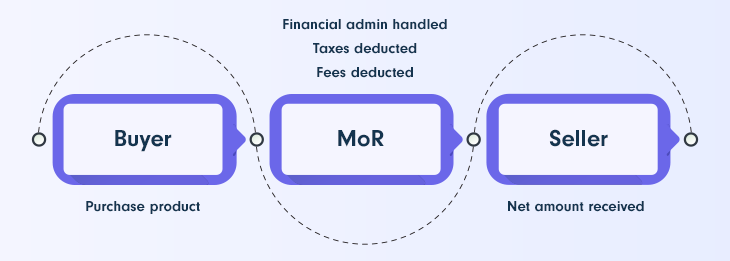
A Merchant of Record is the legal entity that officially sells a product or service to the end customer and assumes full responsibility for the transaction. When you sell through a Merchant of Record it becomes the seller of record in the eyes of the law and the tax authorities meaning it takes on the legal and financial responsibilities that would otherwise fall on you. This structural role is what makes the Merchant of Record model so powerful for e-commerce businesses.
The core function of a Merchant of Record is to handle the entire transaction on your behalf. This includes processing the payment, charging the correct taxes, managing compliance and taking responsibility for the sale. While your brand still sells the product to the customer it is the Merchant of Record that legally stands behind each transaction. The customer buys from your store but the Merchant of Record is the official seller in the background.
The key responsibilities assumed by a Merchant of Record include tax collection and remittance, payment processing, fraud prevention, chargeback management and regulatory compliance. It calculates and collects VAT, sales tax or GST depending on the customer's location, remits these taxes to the relevant authorities and issues compliant invoices.
This model allows businesses to sell internationally without managing the overwhelming complexity of tax and compliance across every market. Inflowpay acts as your Merchant of Record taking on all these responsibilities so you can focus on growing your business. Start at inflowpay.com.
Who Collects the VAT When You Sell Through a Merchant of Record?
When you sell through a Merchant of Record it is the Merchant of Record that collects the VAT, not you. As the legal seller of every transaction the Merchant of Record takes full responsibility for charging, collecting and remitting VAT on your behalf. This is the fundamental advantage of the model. Here is exactly how VAT collection works when you sell through a Merchant of Record.
The Merchant of Record charges the VAT at checkout
The first step is that the Merchant of Record charges the correct VAT at checkout. Because it is the legal seller the Merchant of Record determines the applicable VAT rate based on the customer's location and the product category then adds it to the price at the moment of purchase. This means the correct VAT is automatically applied to every transaction whether your customer is in France, Germany or any other country. You never have to calculate or apply these rates yourself.
The Merchant of Record collects the VAT from the customer
The second step is that the Merchant of Record collects the VAT from the customer. When the customer pays the Merchant of Record receives the full amount including the VAT. As the official seller of record it is the Merchant of Record that legally collects this tax at the point of sale. The VAT collected is held by the Merchant of Record which is responsible for passing it on to the tax authorities.
The Merchant of Record remits the VAT to the tax authorities
The third step is that the Merchant of Record remits the VAT to the relevant tax authorities. This is where the model truly removes the burden from your business. The Merchant of Record files the necessary returns and pays the collected VAT to each country's tax authority on your behalf. You never have to register for VAT in multiple countries, file returns or interact with tax administrations.
You are freed from VAT responsibility
The result is that you are freed from VAT responsibility on these transactions. Since the Merchant of Record is the legal seller it assumes the compliance obligations and the associated risk. This allows you to sell internationally without managing VAT complexity across dozens of jurisdictions.
What Are the Advantages of Letting a Merchant of Record Collect the VAT?
Letting a Merchant of Record collect the VAT offers significant advantages that simplify your operations, reduce your risk and free your time. Rather than managing the overwhelming complexity of international VAT yourself you delegate it entirely to the legal seller of your transactions. Here are the main advantages of letting a Merchant of Record collect the VAT.
No need to register for VAT in multiple countries
The first advantage is that you avoid registering for VAT in multiple countries. Normally selling across borders can require registering for VAT in each country where you have tax obligations which is complex, time-consuming and costly. When a Merchant of Record collects the VAT it handles these registrations and obligations on your behalf. You sell internationally without the administrative burden of multiple VAT registrations.
Automatic compliance across all jurisdictions
The second advantage is automatic compliance across all jurisdictions. Each country has its own VAT rates, rules and reporting requirements that change regularly. A Merchant of Record stays up to date with these rules and applies the correct treatment automatically. This ensures your transactions remain compliant everywhere you sell without you having to monitor constantly evolving tax regulations.
Elimination of tax risk and penalties
The third advantage is the elimination of tax risk and penalties. VAT non-compliance can lead to back taxes, penalties and interest that accumulate silently as you scale. Because the Merchant of Record is the legal seller it assumes this responsibility and the associated risk. This protects your business from costly mistakes and gives you peace of mind knowing your VAT obligations are properly handled.
More time to focus on growth
The fourth advantage is that you gain more time to focus on growing your business. Managing VAT across multiple countries consumes enormous time and energy. By delegating this to a Merchant of Record you free yourself from tax administration and can concentrate on what truly matters like product, marketing and scaling. This is one of the most valuable benefits of the model.
Simplified accounting and reporting
The fifth advantage is simplified accounting. With the Merchant of Record handling VAT collection and remittance your financial processes become far cleaner and easier to manage.
FAQ about VAT and Merchant of Record
Who is legally responsible for collecting VAT with a Merchant of Record?
With a Merchant of Record the Merchant of Record itself is legally responsible for collecting VAT, not you. As the legal seller of every transaction it takes on the responsibility of charging the correct VAT at checkout, collecting it from the customer and remitting it to the relevant tax authorities. This means the compliance obligation and the associated risk shift from your business to the Merchant of Record. This is the fundamental advantage of the model. With Inflowpay as your Merchant of Record this entire responsibility is handled on your behalf. Start at inflowpay.com.
Do I still need to register for VAT if I use a Merchant of Record?
No when you use a Merchant of Record you generally do not need to register for VAT in the countries where it handles your transactions. Because the Merchant of Record is the legal seller it manages the VAT registrations, collection and remittance on your behalf. This eliminates one of the most complex and time-consuming aspects of selling internationally. Instead of registering for VAT across multiple jurisdictions and filing returns in each one you delegate this entirely to the Merchant of Record which is a major simplification for growing e-commerce businesses.
How does a Merchant of Record calculate the correct VAT?
A Merchant of Record calculates the correct VAT by determining the applicable rate based on the customer's location and the product category. Since VAT rates vary from country to country and even by product type the Merchant of Record applies the specific rate required for each transaction automatically. It stays up to date with the constantly changing VAT rules across jurisdictions and applies the correct treatment at checkout. This ensures every sale is charged the right amount of VAT without you having to track or calculate these rates yourself.
Does the customer pay more when VAT is collected by a Merchant of Record?
The customer pays the VAT that applies to their purchase just as they would with any compliant seller. The Merchant of Record charges the correct VAT based on the customer's location and includes it in the transaction. This does not mean the customer pays more than they should but rather that the correct legal VAT is properly applied and collected. The difference is that with a Merchant of Record this process is handled accurately and automatically ensuring compliance while giving the customer a smooth and transparent checkout experience.
What is the difference between a Merchant of Record and a payment processor for VAT?
The key difference is legal responsibility. A payment processor simply processes the payment and does not take on the legal responsibility for the transaction or its taxes. A Merchant of Record on the other hand becomes the legal seller and assumes full responsibility for VAT collection, remittance and compliance. This means a payment processor leaves the VAT burden on you while a Merchant of Record removes it entirely. This distinction is crucial for international sellers who want to eliminate tax complexity. Inflowpay acts as a full Merchant of Record. Start at inflowpay.com.
Can a Merchant of Record handle VAT across multiple countries?
Yes handling VAT across multiple countries is one of the primary benefits of a Merchant of Record. It manages the different VAT rates, rules and reporting requirements of each country automatically applying the correct treatment for every transaction wherever your customers are located. Whether you sell in the European Union, the United Kingdom or beyond the Merchant of Record ensures compliance across all these markets. This allows you to expand internationally without adding tax complexity. With Inflowpay as your Merchant of Record VAT is managed automatically across every jurisdiction.
Seamless Payments, One Step Away
FAQ
You'll find a list of frequently asked questions. Should you have any additional queries, don't hesitate to contact us. We're here to help!
Simple, transparent pricing with no hidden fees. Check out our pricing page for the full breakdown.
Spoiler: low fees all-in with no surprises.
Years ago, selling internationally was complex and expensive. Today, with AI translation and social media, businesses launch globally without even realizing it. Then MoRs (Merchants of Record) arrived promising easy global payments, but with brutal terms: 10%+ fees, terrible acceptance rates, unoptimized checkouts, and random account blocks. It worked for some, but limited many more.
With Inflow, you're global from day one with best-in-class terms from the start: transparent pricing, highest acceptance rates, and zero risk of sudden suspensions.
Absolutely. We handle the entire migration, your customers won't even notice the switch. Zero downtime, zero disruption, and your recurring revenue keeps flowing uninterrupted.
Step Into Your Inflow Journey Today
We are limiting access to ensure quality service for each merchant and to guarantee the security of customers purchasing through Inflow